One decision, mapped.
This example follows a small travel choice from useful research into regret prevention.
The first map stays with one concrete scene. The deeper preview shows how the same hinge could be tested across other decisions and settings.
The example is fictional and intentionally ordinary.
The ordinary detail.
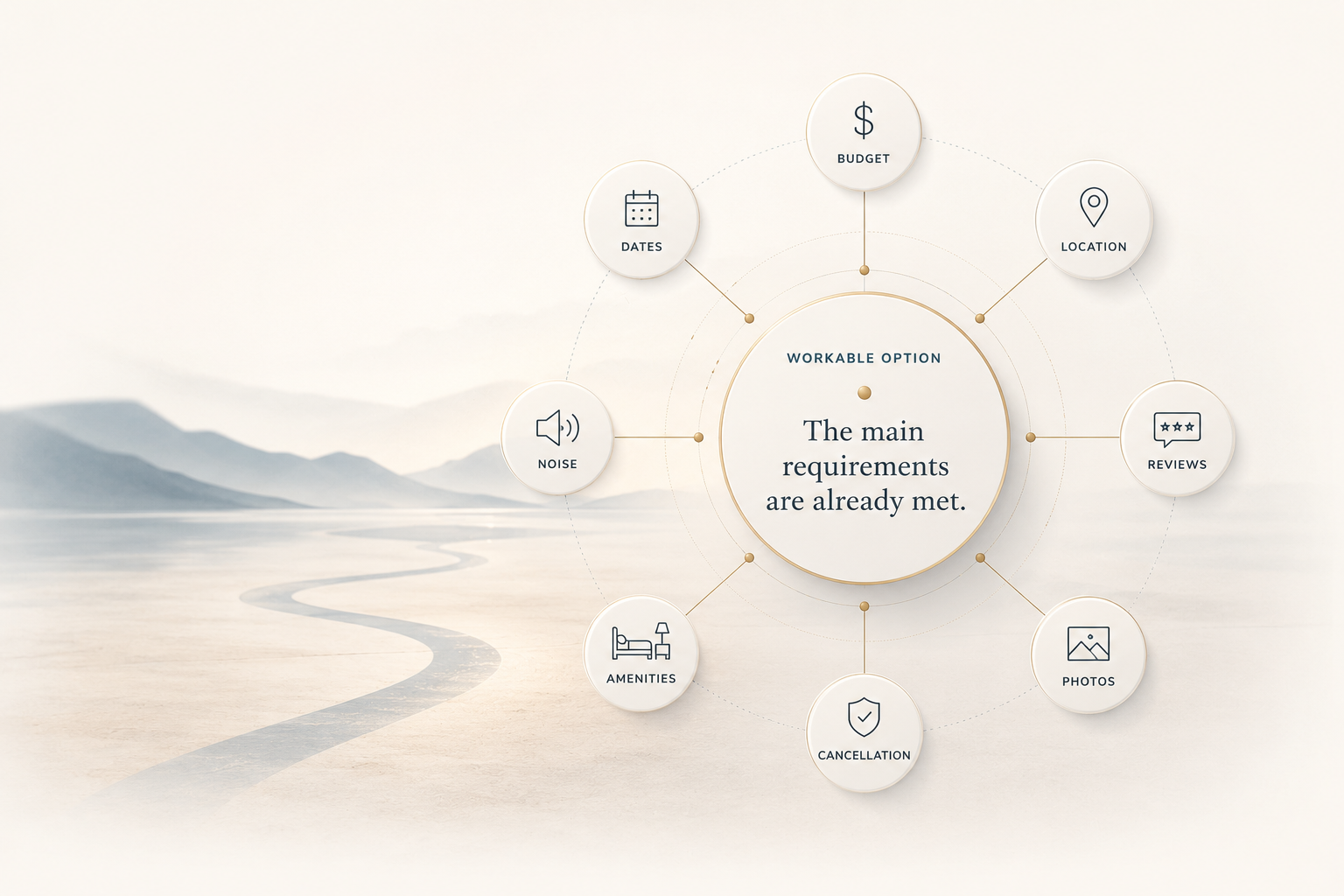
One option already fits.
The dates, budget, location, and basic needs are covered. Instead of booking, you keep opening tabs, reading more reviews, comparing photos, and checking differences that probably will not change the decision.
The scene, organized into a working pattern.
The full map separates the visible behavior from the hinge, protective function, later cost, and earlier point of intervention.
When More Information Stops Helping
The search has stopped serving the decision and started protecting against the emotional cost of choosing.
The Option Keeper
01
What is visible?
A good-enough option is already available, but the search keeps expanding.
02
What keeps the search moving?
The task stops being about finding a workable place and starts feeling like avoiding the regret of choosing wrong.
The Option Keeper preserves alternatives so the cost of commitment does not have to land yet.
More tabs, reviews, and comparisons create the feeling that a bad choice is still being prevented.
03
What becomes harder?
More information begins creating more pressure. Research has become a way to delay the emotional cost of closure.
The options blur together, the process consumes more time, and choosing starts to feel heavier than the trip itself.
04
Where can the sequence change?
You are checking small differences after the main requirements are already met.
Name the option you would choose if you had to book in five minutes. Allow one final question.
A useful map earns recognition.
The report gains value when the user can test its structure against the original scene and recognize the sequence before the same outcome takes over.
01
Anchored
The interpretation stays connected to details specific enough to replay, rather than drifting into a general personality description.
02
Recognizable
The hidden hinge and protective move describe a shift the person can actually recognize in the moment.
03
Testable
The earlier signal and small experiment are proportionate enough to try in real life.
Read the map as a working hypothesis. Its usefulness comes from scene fidelity, recognition, and what becomes easier to notice next time.
Several scenes can test whether the same hinge recurs.
One map describes this travel decision. A deeper map could compare moments where enough information is already present but choosing still feels unsafe.
The comparison helps separate information needs, situational pressure, personal tendency, and the emotional cost of commitment.
Illustrative preview · in development01
TravelBooking a place to stay
The main requirements are met, but reviews and tabs keep multiplying.
Booking creates the possibility of later blaming yourself for a poor choice.
02
CareerChoosing between viable roles
Several realistic options remain open while more research produces less clarity.
Choosing one role begins to feel like taking responsibility for every tradeoff that follows.
03
PlaceMoving or staying put
A workable housing choice keeps being reopened after the core criteria are satisfied.
The move begins carrying questions of belonging, obligation, identity, and irreversible regret.
Regret Prevention Loop
A workable choice starts feeling like ownership of a future mistake.
Preserve options and postpone closure.
More information creates more pressure and less confidence.
The need for more facts versus the need to tolerate commitment.
Start with your own visible moment.
Choose one situation specific enough to replay. The first map gives you one pattern to test against your experience.